
What Is a Visual Sales Pipeline?
Term 16 Nov 2026 sales pipelineCRM basicssales managementdeal tracking
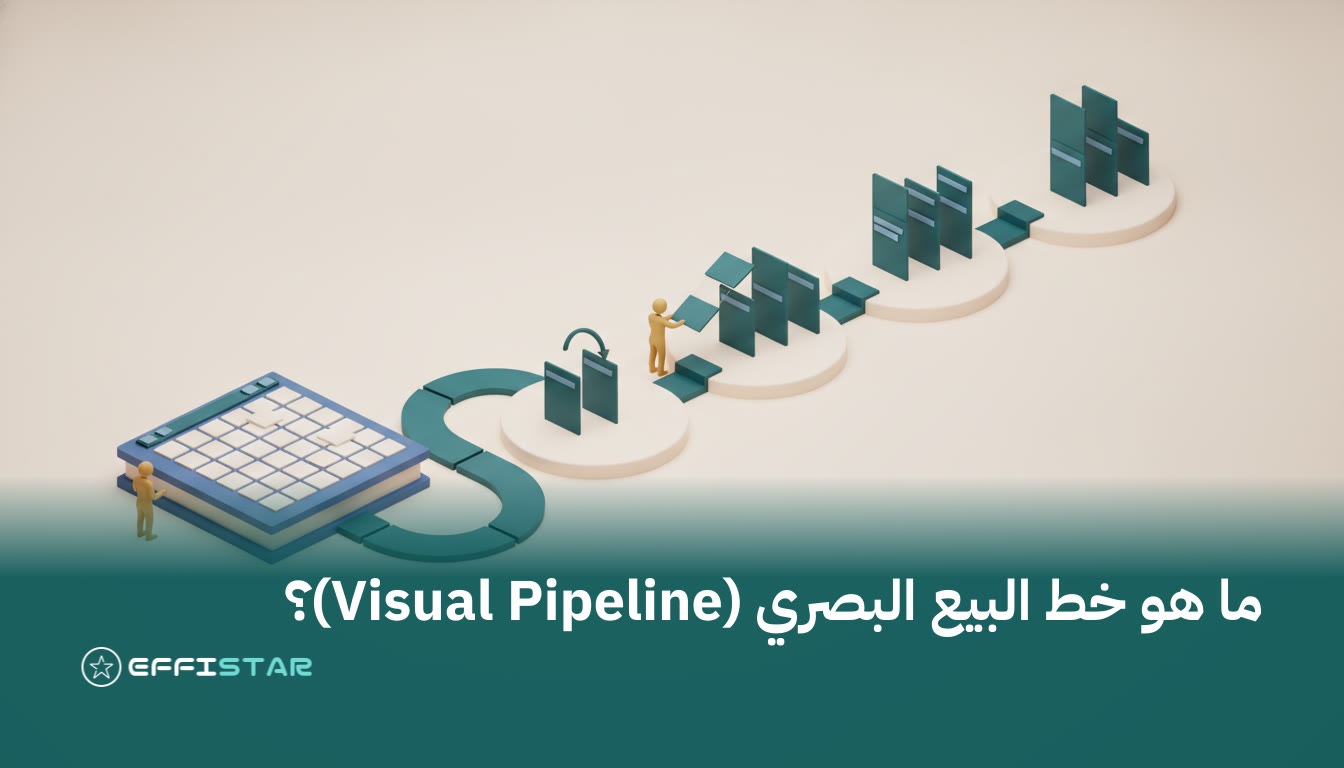
A visual sales pipeline is a board that displays every deal as its own card, arranged in columns that represent your sales stages — from first contact through to closing. It's called "visual" because you read a deal's status from where it sits on the board rather than from a text field, and you move it forward by dragging it from one column to the next.
The definition
The stages are sequential columns that describe what actually happens in your sales process — for example: first contact, qualification, quote, negotiation, closing. Each card carries the client's name, the deal value, the expected close date, and the owner. The total value at the top of each column tells you the weight of that stage at a glance.
The difference from a spreadsheet isn't only cosmetic:
| Aspect | Excel spreadsheet | Visual pipeline |
|---|---|---|
| Reading status | Rows and text fields | Position of the card |
| Deal history | Typed in manually, if anyone remembers | Logged automatically on every move |
| Time spent in a stage | Not tracked | Shown on the card |
| Team collaboration | Multiple conflicting copies | One shared record |
Why it matters
Because the most dangerous deal in your pipeline isn't the one you lose — it's the one that stops moving. In a spreadsheet, nothing warns you that a quote has been sitting untouched for three weeks. On a board, you see it: a card gone stale in the same column. That turns your weekly sales meeting into a conversation about specific deals instead of a conversation about impressions.
How to put it in place
- Write your stages based on how you actually sell, not from a ready-made template. Five to seven stages are usually enough.
- Define the exit condition for each stage in a single sentence: what has to be true before the card moves on?
- Make it clear to the team that moving the card is the update — no parallel reports.
- Watch two numbers: how many deals sit in each stage, and the average days they spend there.
- Build a separate pipeline for each distinct line of business (direct sales, tenders, renewals) — each one has its own stages.
In Effistar, these stages are built in Arabic and can be adjusted without any coding.
A hypothetical example
A fictional office-supplies company moved 40 deals from a spreadsheet onto a board. Within two weeks it became clear that 17 of them were stuck at "quote" for an average of 26 days — and that the cause was the absence of a defined follow-up step after sending the quote, not uncompetitive pricing.